NASA’s Aerospace Medicine Clerkship
Let me start by answering your first question about this elective: What is Aerospace Medicine? Well, it’s the field of medicine responsible for managing the health effects of flying and medical qualifications to fly. It’s mainly concerned with taking care of pilots, flight crews, and astronauts. Technically it falls within the category of occupational medicine and is considered a primary care specialty. However, many flight surgeons (physicians that practice aerospace medicine) have a different primary medical specialty they trained in. Most commonly these specialties being Emergency Medicine or Internal Medicine. Flight surgeons are commonly employed by the Federal Aviation Administration, NASA, and the military but many other private aerospace companies employ flight surgeons. They run clinics, travel to austere medical environments, and help plan for high performance missions.
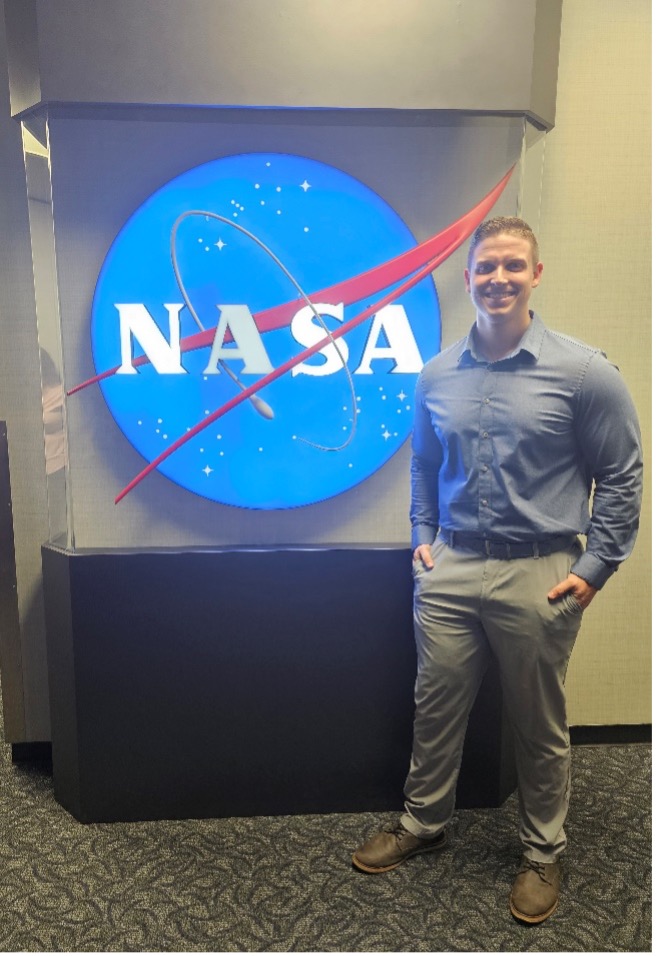
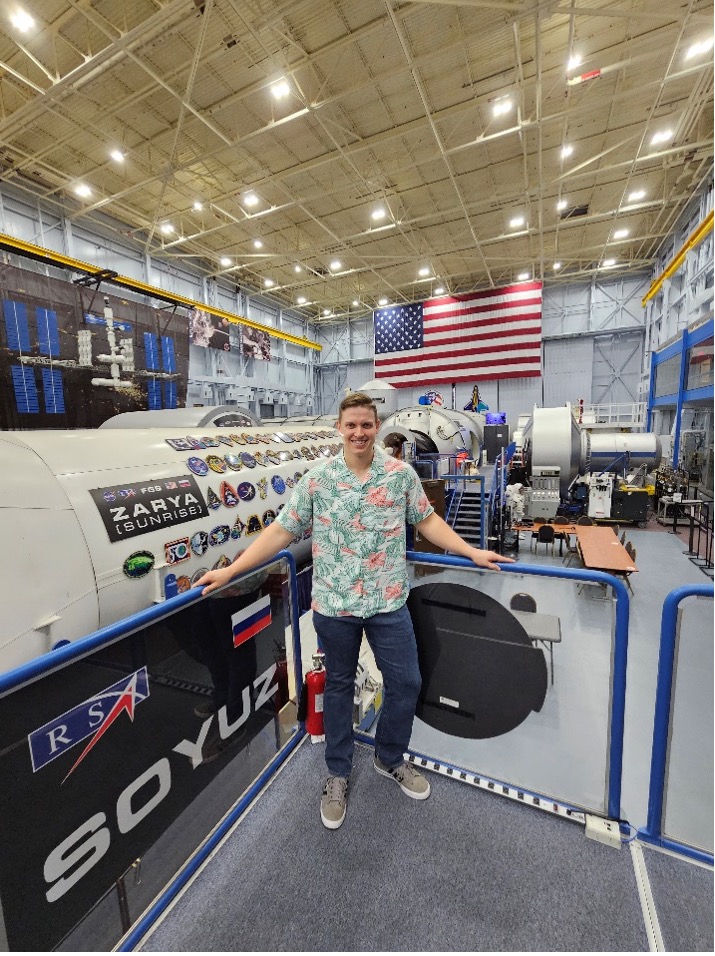
In October I got to participate in an aerospace medicine clerkship at the Johnson Space Center (JSC) in Houston, Texas. NASA hosts this clerkship twice a year, once in October and once in April. My Air Force background in combination with being a huge space nerd with hopes of being a flight surgeon for NASA one day made this an amazing opportunity for my career goals. The clerkship lasts a month long and has a few main components to it.
A large portion of the clerkship comprised daily lectures from subject matter experts on a variety of topics. We learned about the physiology of bone remodeling, spaceflight associated neuro-ocular syndrome (why some astronauts become nearsighted in space), microbiology in space, space medicine operations, and mission planning to name just a few. They were some of the most fascinating lectures I’ve had the privilege to hear and introduced so many more challenges to human spaceflight than we typically think of.

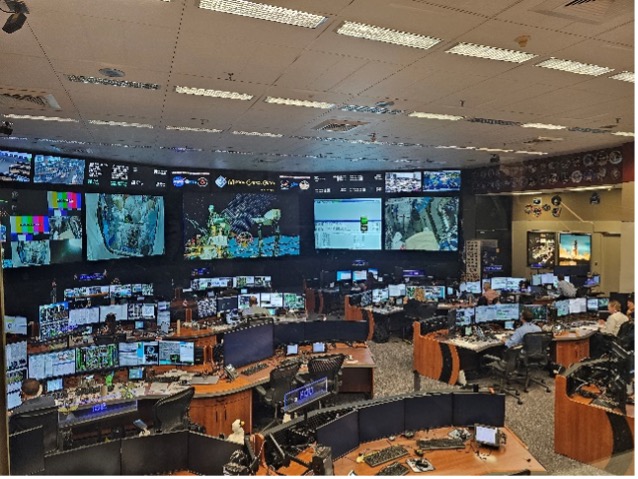
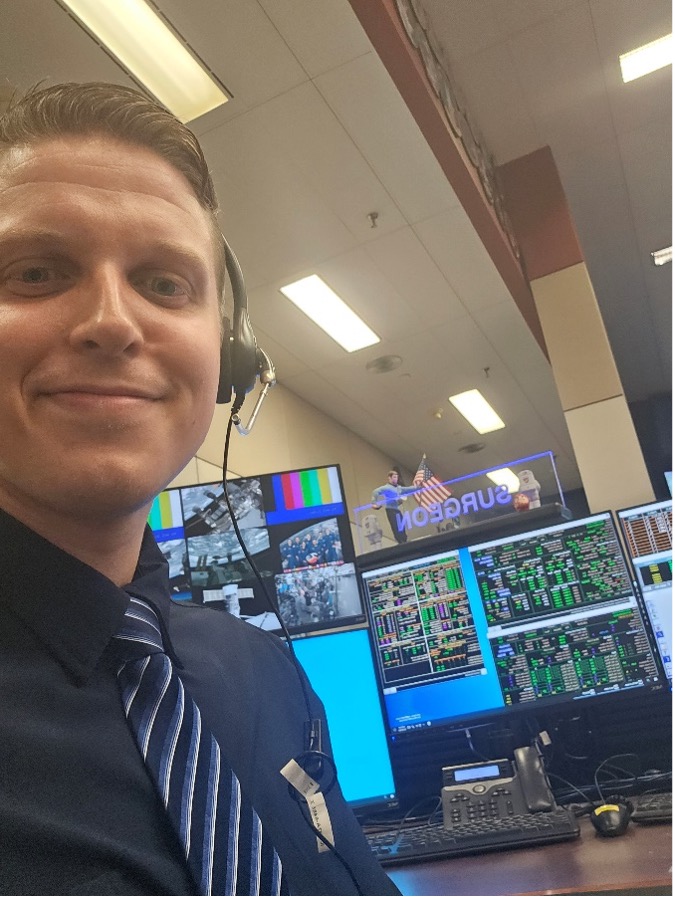
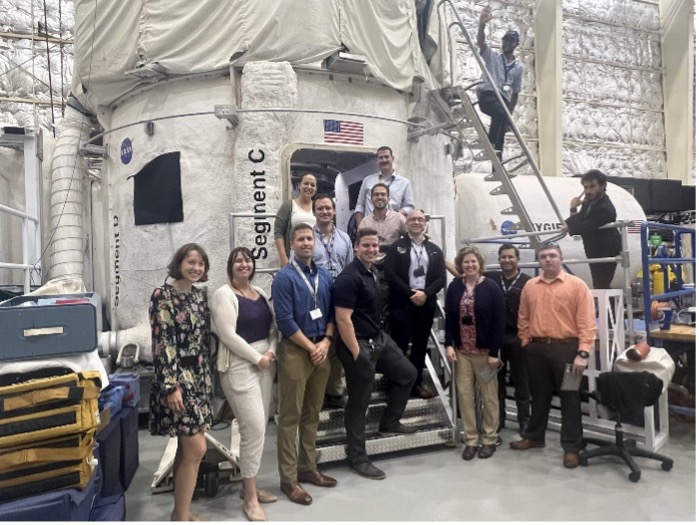
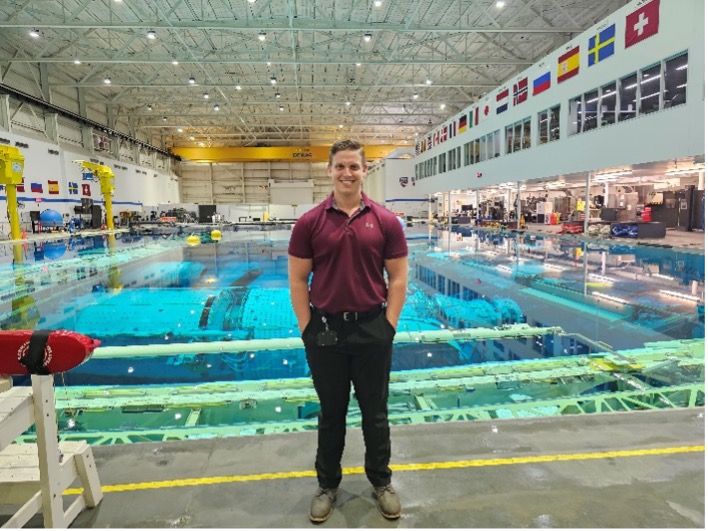
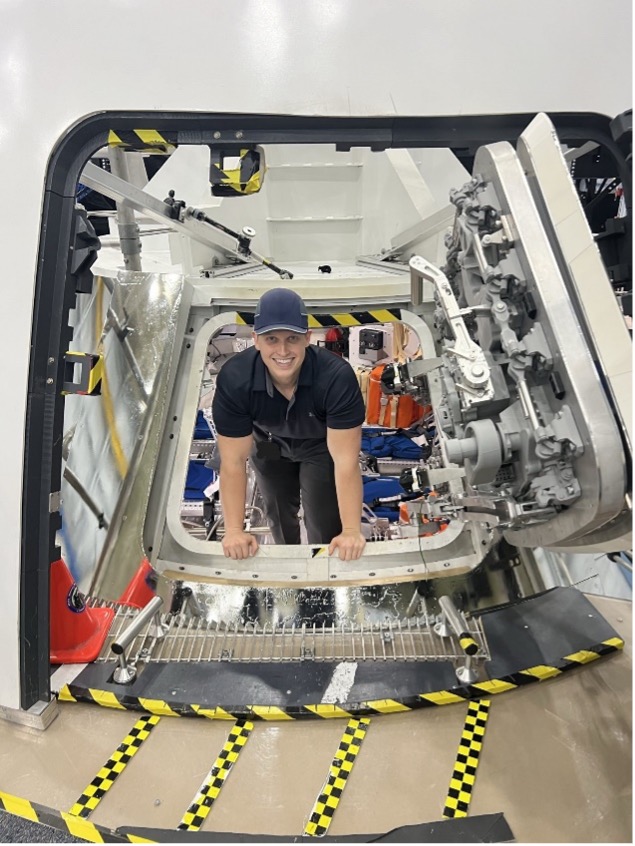
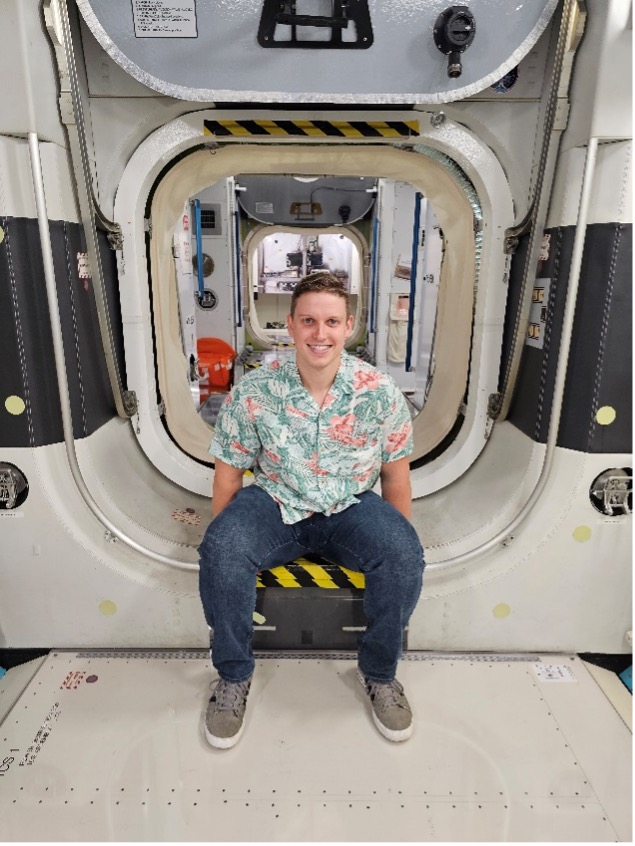
We also received tours of the cool facilities at JSC. We toured the mockup vehicles they use to train astronauts on International Space Station (ISS) systems, the Orion which is the capsule they’re using to return to the moon and basically any other NASA vehicle or module astronauts’ interface with. Luckily because of my research project I got to go into the Orion trainer and “demo” some of the systems in it. We toured the mission control center where they communicate with the astronauts and control the ISS. This included the original Apollo mission control room which is restored to look exactly like the original Apollo mission days, down to the cigarette butts in ash trays. They even had recordings that replicated the exact audio and displays the moment we landed on the moon. They took us to see the Neutral Buoyancy Lab where they use a giant pool with a replica space station in it to train astronauts in a simulated microgravity environment. We toured the different science labs like immunology, food science, human performance, and acoustics. We saw the mission analog facility where they have different space habitats they put people in to study the psychology of confined quarters and isolation. The coolest experience I had by far was getting to sit on console with the flight surgeon on shift at mission control, especially since the Russians were starting a spacewalk while I was there. I got to wear a head set and listen in on all the different consoles talking to each other and the astronauts. I even got to hear sign out as new staff came onto their shifts at mission control.
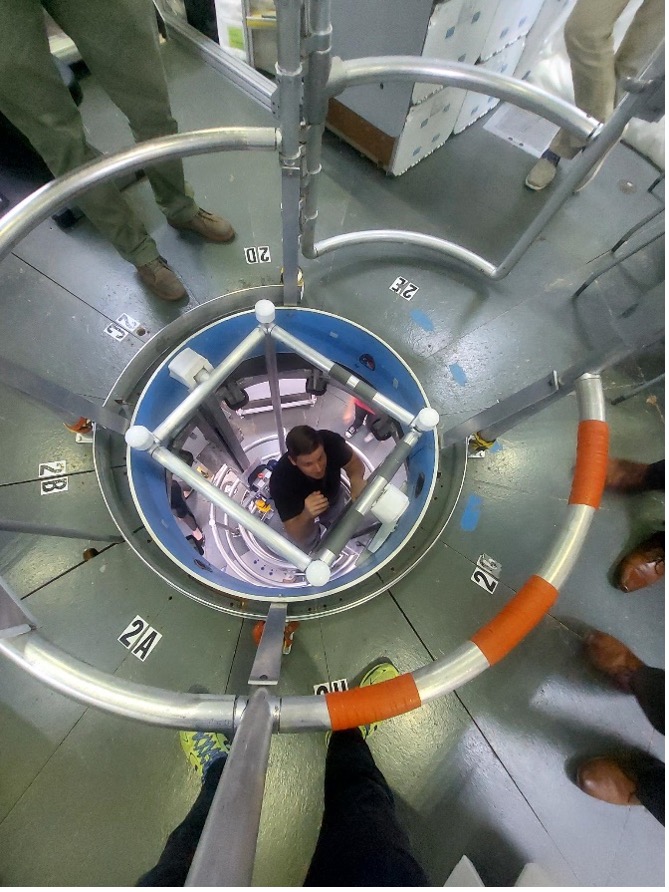
The final component of our clerkship was our research projects. Each of us was assigned a mentor and with that, a research project to work on while there. Many of them had to do with different disease states and physiologic changes in space like decompression sickness, kidney stones and elevated intracranial pressure. I was a big fan of mine since it had me starting the process of building a flight surgeon quick reference guide for the Artemis II mission. For those of you who aren’t aware we are currently working on going back to the moon with the mission’s name being “Artemis”. The Artemis II mission is planning to use the Orion vehicle to orbit the moon in 2025. My role was taking the guide they currently have for the ISS and modifying it so all the medical conditions and the medical supplies available to treat them matched what’s going to be on the Orion vehicle. It was incredible to work on a guide that is going to be used operationally on the next Artemis mission and now I get to say that I technically worked on the next moon mission.
This was by far one of the coolest things I’ve ever gotten to participate in and a career defining experience. Not only did I get to learn a lot I also got to network with a lot of the leaders in aerospace medicine. With the rapidly expanding capabilities of the American space programs both government and private the field of aerospace medicine is looking for plenty more flight surgeons. For anyone interested, the Aerospace Medical Association and the NASA website (where I applied for this opportunity) are great resources. I’d like to finish by saying I’m lucky to have a program that not only supported me in going to this elective but a community that expressed so much excitement on my behalf. Having my co-residents, faculty and attendings cheer me on while I got to have one of the best experiences of my life made it all the better.
 ACMC Emergency Medicine